Serving Vincennes, IN and surrounding areas. (812) 291-9608
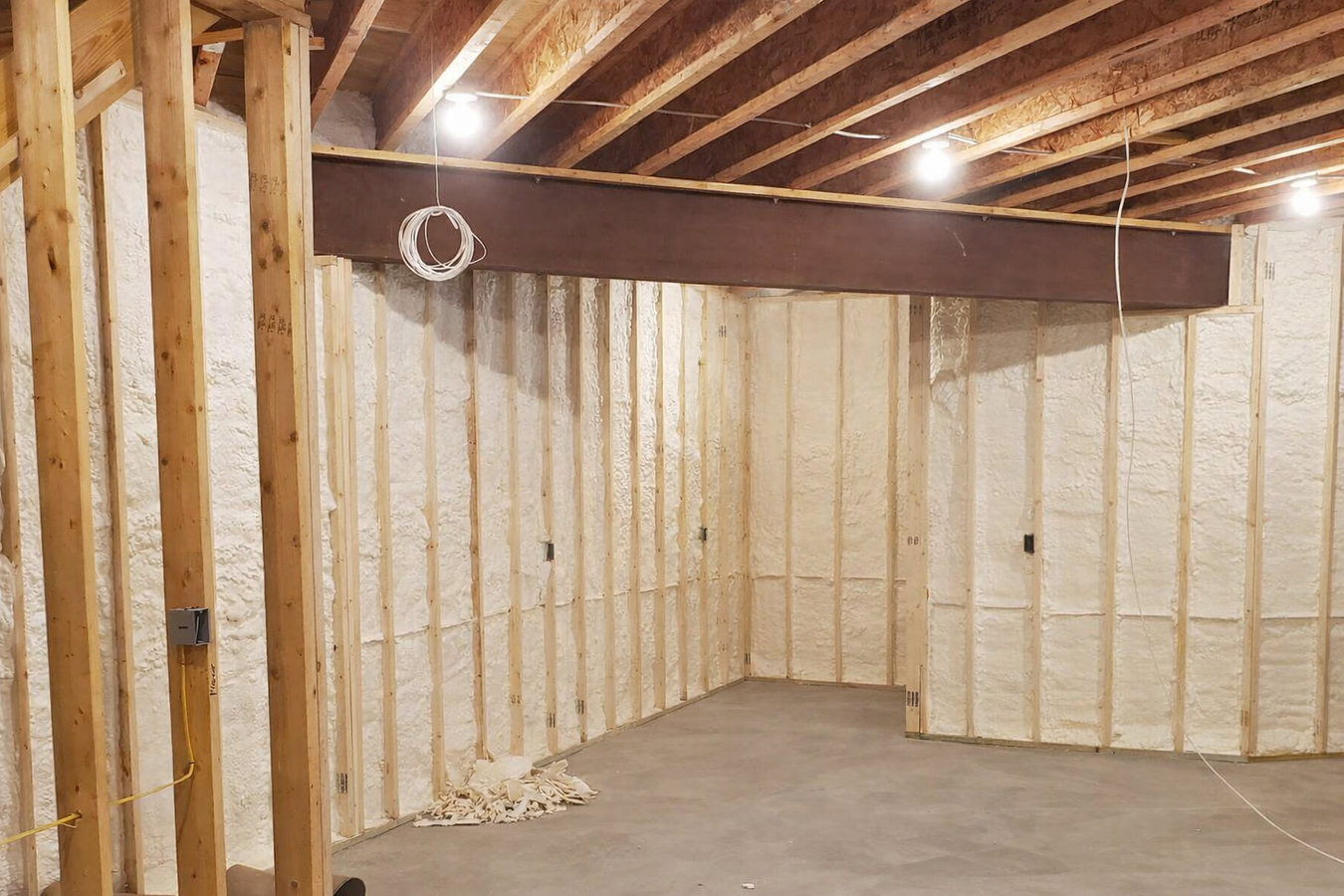
Cold floors and climbing gas bills often trace back to an uninsulated basement. We insulate walls, rim joists, and ceilings so your home holds heat the way it should through every Knox County winter.
Basement insulation in Vincennes addresses heat loss through foundation walls, rim joists, and the underside of your first floor, and most jobs are completed in one to two days for an average home.
If your first-floor floors feel cold in January or your furnace seems to run all day without catching up, the basement is almost always part of the problem. Homes built before 1980 in Vincennes were rarely constructed with any basement insulation at all - it simply was not standard practice. That means heat escapes downward into the ground while you pay to replace it.
Proper basement insulation works hand in hand with closed-cell foam insulation when walls and rim joists need a material that seals and insulates in one step. We will help you understand which approach fits your home before any work begins.
If the floors on your first floor feel noticeably cold in winter - especially over an unfinished basement - heat is escaping downward rather than staying in your living space. In Vincennes winters this shows up clearly by December and worsens through February. Adding insulation to the basement ceiling or walls stops that cold from migrating up.
If your gas bill feels out of proportion to the size of your house, an uninsulated basement is one of the first places to look. Vincennes homeowners with older homes are often heating the ground beneath their house without realizing it. A quick check: does your basement feel noticeably colder than the rest of the house in winter?
Moisture in a Vincennes basement is not unusual given the area's proximity to the Wabash River lowlands, but it needs to be addressed before insulation goes in. Water stains on walls, a musty odor, or condensation on pipes are all signs that need attention. A contractor will check carefully before recommending next steps.
Homes built before 1980 in Vincennes were almost never built with basement insulation as a standard feature. If you have lived in your home for years and no one has done insulation work in the basement, there is very likely little or none down there. A contractor can confirm this during a free estimate visit.
We offer both basement wall insulation and basement ceiling insulation, and we match the method to how you actually use the space. Wall insulation keeps the basement itself warmer - a good fit if you spend time down there as a workspace or finished room. We also work closely with our crawl space insulation service for homes that have both a partial basement and crawl space areas, which is common in older Knox County construction.
One area we always address is the rim joist - the band of wood framing that sits on top of your foundation wall. This narrow zone is one of the biggest sources of heat loss in older homes and is easy to miss, but it makes a meaningful difference once it is sealed and insulated. Before any material goes in, we check for moisture signs, because insulating over a damp surface causes more problems than it solves.
Best suited for homeowners who use their basement as living, workspace, or finished area and want the whole space to stay warm.
Ideal for unfinished basements used mainly for storage - insulates the floor above at lower cost without conditioning the basement itself.
Addresses one of the highest-impact air and heat loss points in older homes, where the foundation meets the wood framing above it.
Required for any Wabash River area home with a history of dampness - we verify conditions are right before any material goes in.
Vincennes sits in Knox County in southwestern Indiana, where winter temperatures regularly drop into the teens. That sustained cold puts real pressure on an uninsulated basement - heat escapes fast, pipes are at risk of freezing, and your furnace runs far longer than it should. A large share of homes in Vincennes were built before 1960, and many were built well before that. Homes from that era were not built with basement insulation as standard practice, which means homeowners are often losing a significant amount of heat every winter without realizing it. Homeowners in Washington, IN and Princeton, IN face the same challenge with similarly aged housing stock, and we serve both communities regularly.
The Wabash River lowlands also mean basements here are more prone to humidity and occasional moisture intrusion than homes on higher ground. This is not a reason to skip basement insulation - it is a reason to do it correctly, with a proper moisture check before anything goes in. A contractor who knows this area understands that step is not optional. Most Vincennes homeowners heat with natural gas, and gas prices have been volatile. Reducing how hard your furnace has to work directly translates to lower bills, and many homeowners notice the difference after their first full winter post-installation.
We respond within one business day. When you reach out, we ask a few basic questions about your basement size, whether it is finished, and any moisture history - so we come prepared rather than starting cold.
We walk through the basement with you, check walls, the rim area, and any signs of moisture or air leaks. A thorough visit typically takes 30 to 60 minutes, and we explain what we are seeing in plain terms.
You receive a written proposal outlining exactly what work will be done, what materials will be used, and the total cost. This is the right time to ask about permits, timing, and what you need to clear before installation day.
Most basement insulation jobs finish in one to two days. Before the crew leaves, we walk through the finished work together so you can see complete, consistent coverage and ask any final questions.
Free estimate, no obligation. We respond within one business day.
(812) 291-9608We know that homes near the Wabash River lowlands have moisture dynamics that other areas do not. We check for water intrusion before any material goes in - because insulating over a damp surface creates a bigger problem than the one you started with.
The rim joist is the zone where your foundation meets the wood framing above it - one of the highest-impact heat loss points in older homes and easy to overlook. We include it in every basement assessment because skipping it leaves a significant gap in the thermal barrier.
A large share of Vincennes homes were built before 1960, and older construction has quirks - irregular framing, settled foundations, and configurations that need to be worked around carefully. We are familiar with what older Knox County homes look like inside, and we plan installations accordingly. The U.S. Department of Energy recommends addressing both air sealing and insulation together for the best results in older homes.
You will receive a clear written proposal that spells out exactly what areas will be treated, what materials will be used, and what the total cost will be. No surprises on installation day, and no pressure to sign before you are ready.
We combine local knowledge of Knox County's housing stock and climate conditions with a transparent process from estimate to final walkthrough. When the job is done, you will know exactly what was installed and why.
High-performance spray foam that insulates and seals air gaps in one pass - well suited for basement walls and rim joists in older Vincennes homes.
Learn MoreInsulation and moisture management for homes with crawl space areas, addressing the same ground-contact heat loss and humidity challenges as basement work.
Learn MoreVincennes winters are already cold enough - do not head into another heating season losing heat through an uninsulated basement. Call now or submit a request and we will get back to you within one business day.