Serving Vincennes, IN and surrounding areas. (812) 291-9608
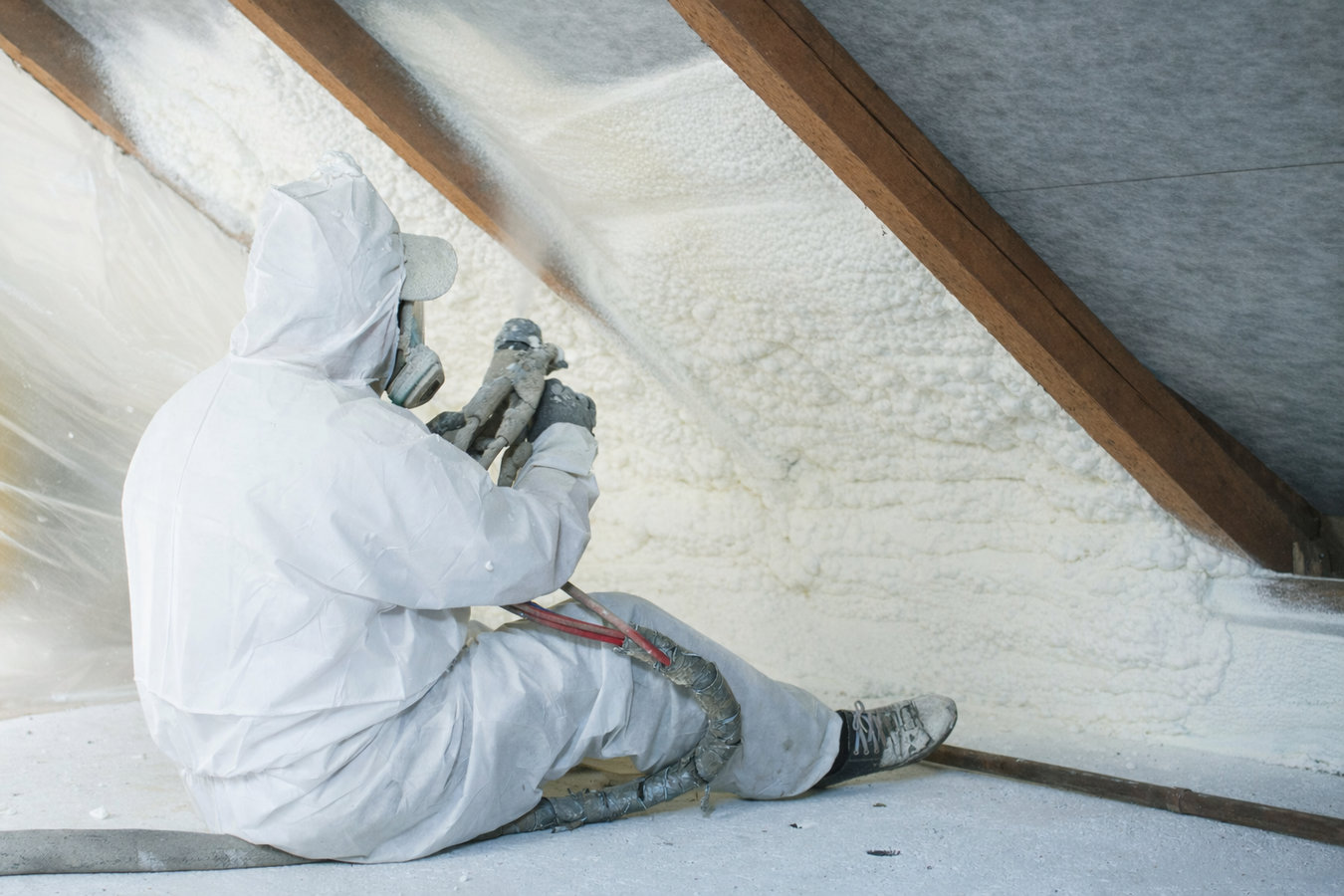
Closed-cell spray foam insulates and blocks air and moisture in one pass - the strongest upgrade available for older Knox County homes with drafty walls, crawl spaces, or leaky rim joists.
Closed-cell foam insulation in Vincennes is sprayed as a two-part liquid that expands and hardens into a dense, firm layer, sealing air gaps and insulating at the same time, and most residential applications are completed in a single day.
Unlike fiberglass batts or loose-fill materials, closed-cell foam handles three jobs at once: it slows heat transfer, blocks air movement, and resists moisture. That combination is particularly valuable in homes near the Wabash River valley, where humidity and cold winters put pressure on walls and crawl spaces year-round. Older Vincennes homes built in the mid-20th century often have construction styles - like minimal rim joist insulation - that leave large pathways for heat to escape. Foam fills those irregular gaps in ways that batt insulation cannot.
For homes where the full scope of the work extends to spray foam throughout the attic and walls, closed-cell foam pairs well with our broader spray foam insulation service. If you are comparing material options, our open-cell foam insulation page explains how the two types differ and which applications each suits best.
If your gas or electric bill has crept up year over year and nothing obvious has changed, heat loss through under-insulated walls, floors, or the attic is a likely cause. In Vincennes winters, a poorly insulated home can lose heat fast enough that your furnace runs almost continuously - which shows up directly on your utility statement.
If one or two rooms are always chilly no matter how high you set the heat, those spaces are losing warmth faster than the rest of the house. This is especially common in rooms above a crawl space or in older Vincennes homes where the original insulation has compressed over decades. It is a sign the thermal barrier in that area has broken down.
Homes near the Wabash River valley are particularly prone to crawl space moisture because of the area's high water table and humid summers. If you have seen water stains, felt dampness, or noticed a musty odor coming up through your floors, your crawl space is likely unprotected against ground moisture - and that moisture can damage floor joists over time.
Air leaks are one of the biggest sources of heat loss in older homes, and you can often feel them without any special equipment. Hold your hand near an electrical outlet on an exterior wall on a cold day. If you feel cool air, the wall cavity behind it is connected to the outside - exactly the kind of gap closed-cell foam is designed to seal.
We apply closed-cell foam to the areas where it delivers the most impact: crawl space walls and floors, basement rim joists, wall cavities in older homes, and attic decking or knee walls. In each location, the foam expands to fill every gap and hardens in place, cutting off the pathways that cold air and moisture use to enter the home. For homes with both crawl space and basement areas, we coordinate the scope so no section is missed - and we always assess for moisture before any material is applied.
Because closed-cell foam handles insulation and air sealing in one application, it simplifies the process compared to doing both steps with separate materials. Before work begins, we measure the target areas carefully and discuss the appropriate thickness for your climate zone - because applying foam too thin leaves performance on the table, and applying it too thick in a single pass affects cure quality. Indiana utility providers including Duke Energy Indiana have offered rebate programs for qualifying energy efficiency work, so it is worth asking before you schedule whether any current incentives apply to your project.
Best for homes near the Wabash River lowlands where ground moisture and cold air both need to be blocked at the foundation level.
Targets the high-impact zone where foundation meets framing - one of the most effective single investments in an older Vincennes home.
Provides both insulation and moisture resistance for basement walls, well suited for homes where the space is used regularly.
Addresses heat loss through exterior walls and attic knee walls, particularly effective in pre-1980 construction with irregular framing.
Vincennes sits in the lower Wabash River valley, where winters bring sustained cold alongside significant humidity. That combination drives moisture into wall cavities and crawl spaces in ways that dry-cold climates do not experience. For homeowners here, insulation that also blocks moisture movement is not just a performance upgrade - it is genuinely protective. A significant portion of homes in Vincennes were constructed in the mid-20th century or earlier, when insulation was minimal and air sealing was not a concept most builders thought about. Many of these homes have minimal rim joist insulation or balloon-frame construction that leaves large channels for heat to escape rapidly in winter. Homeowners in Mount Carmel, IL and Lawrenceville, IL face similar conditions across the Wabash River, and we serve both communities with the same approach.
Closed-cell foam is well suited to retrofitting older structures because it can be sprayed into irregular cavities and gaps that batt insulation cannot fill cleanly. Homes near the Wabash River floodplain are especially prone to crawl space moisture issues because of the area's high water table and periodic flooding risk. Foam applied to crawl space walls creates a genuine moisture barrier that matters more here than in drier inland communities. Knox County enforces Indiana's residential building code for insulation work tied to renovations, so your contractor should be familiar with when permits are needed and should handle that process on your behalf.
We respond within one business day. We will ask what areas of the house concern you, how old the home is, and whether you have noticed specific problems like drafts or high bills - so we know what to look for when we arrive.
We walk through the target areas - crawl space, rim joists, basement walls, or wall cavities - measure the space, and check for any moisture or structural issues that need to be addressed first. We explain what we are seeing in plain terms.
You receive a written estimate spelling out what areas will be treated, how thick the foam will be applied, and the total cost. Take time to compare quotes - the lowest price is not always the best value if the scope of work differs.
Most residential foam jobs are completed in a few hours to a full day. Plan to be out of the treated area for at least 24 hours after the last spray. Your contractor will confirm a specific re-entry time before work begins and do a visual coverage check before leaving.
Free in-home assessment, no obligation. We will walk you through exactly what we see and recommend.
(812) 291-9608We understand the crawl space and basement moisture conditions specific to the Vincennes area. We check for water intrusion before any foam goes in, because covering a moisture problem traps it rather than solving it - and we will not let that happen on your job.
Spray foam is not the same as general insulation work - applying it correctly requires controlled lift thickness, proper equipment, and experience reading how older structures will respond. The Spray Polyurethane Foam Alliance maintains training and professional conduct standards for the industry, and we follow those guidelines on every job.
Knox County enforces Indiana's residential building code for insulation work tied to renovations. We know when a permit is required for your specific project and handle the paperwork on your behalf, including coordinating any required inspection.
A significant share of Vincennes homes were built in the mid-20th century with construction styles that create challenges for standard insulation materials. We have worked on enough of these homes to know what to expect - irregular cavities, settled framing, and older pipe configurations - and we plan the installation accordingly.
Our process is straightforward: we assess what is actually there, explain what we recommend and why, and do the work to the standard we would want in our own homes. When we are done, you will see consistent, fully adhered foam coverage with no gaps - and you will know exactly what you paid for.
A lower-density spray foam option suited for interior walls and attic spaces where moisture resistance is less critical than sound control and cost.
Learn MoreFull-scope spray foam services covering attics, walls, and crawl spaces across Knox County - closed-cell and open-cell applications matched to each area.
Learn MoreWinter in the Wabash valley does not wait - seal your crawl space, rim joists, and walls before the cold sets in. Call now or submit a request and we will respond within one business day.